Hands-On Science for Kids: Simple Kitchen Science & Chemistry Experiments
Complete science experiments: Instant Ice, Instant Snowman, Hot Chocolate Science, 2-in-1 Magic Milk & Skittles, The Ultimate Cookie Dunk (Ages 5-10)
Course Summary
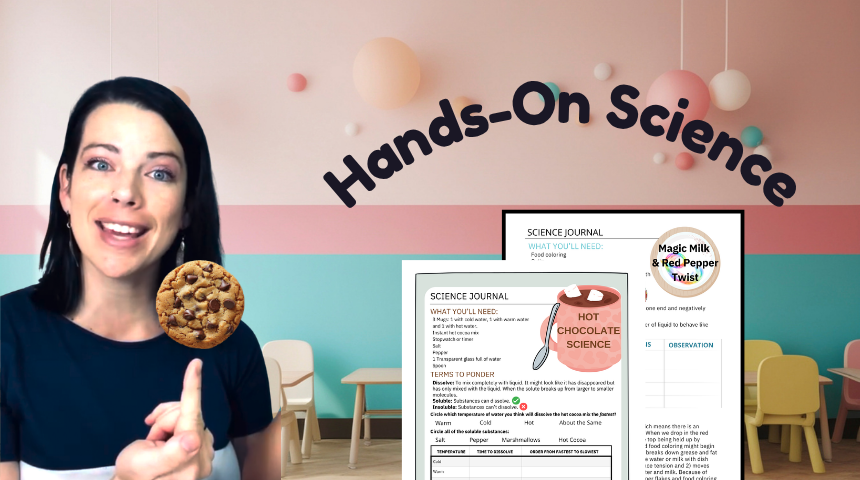
Join this engaging hands-on kitchen science course where learners follow clear, step-by-step instructions to complete exciting food-based STEM experiments using simple items from home. Students will gather supplies, use a printable science journal, and actively practice the scientific method through prediction, observation, and recording results.
Each lesson introduces key science vocabulary in a simple, interactive way so learners understand concepts through doing—not memorizing. To reinforce learning, students will participate in a fun team science review quiz, where they can test their knowledge and replay to improve their score. No account or personal information is required. Homework includes completing science journal pages and uploading photos for teacher feedback and personalized encouragement, helping learners build confidence, observation skills, and real scientific thinking.
Experiments Included:
Hot Chocolate Science (States of Matter & Dissolving) Explore how temperature affects molecular movement while testing what dissolves in hot, warm, and cold water using hot cocoa mix and other food-safe materials.
Frozen Ice Powers & Instant Snowman (Supercooling & Phase Change – 3-in-1) Discover the science of freezing by triggering instant ice formation, experimenting with supercooled water, and creating a fun “instant snowman” reaction.
Magic Skittles & Magic Milk (Diffusion & Surface Tension – 2-in-1) Watch colorful patterns form as Skittles dissolve and explore swirling reactions in milk using simple kitchen ingredients.
The Ultimate Cookie Dunk (Density & Buoyancy) Use the scientific method to test which cookies sink or float while learning about density and buoyancy in a fun, memorable way.
Important Safety & Materials Note
Some experiments require adult supervision, especially when handling hot water. These activities use common food and drink items for science exploration and are not designed for consumption after experiments are completed. Once materials are mixed with non-food substances, they should not be eaten. Families should also be aware of potential allergens in ingredients such as wheat, dairy, eggs, soy, or nuts.
Course Curriculum

Elizabeth McMann
As a homeschooling mother of five, and teacher since 2017, I felt led by the Lord to create an online educational platform. My style of learning didn't fit into the mold of what was out there. Not to mention, the rising prices of other educational platforms limited what classes my children could enjoy. Sifting through online classes and full curriculum that aligns with Christian values is tricky. Today, it seems most Christian curriculum is boring bookwork and/or very costly. I sought to combine everything that I value in education. Teach Me Truth provides entertaining video lessons, live online classes, online games, quizzes, worksheets, and community - all designed by independent teachers within our nonprofit platform.